
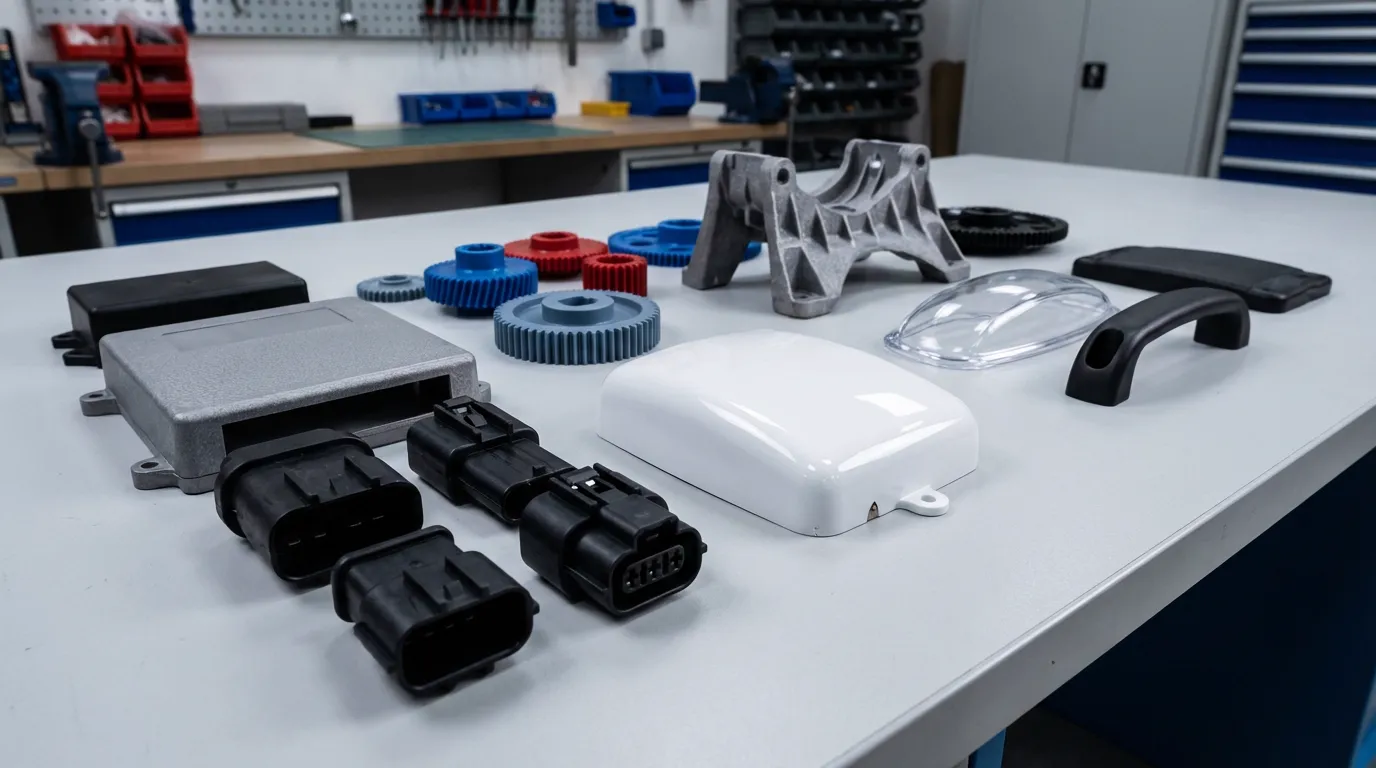
Real hardware rarely stays in one material. A desk lift might combine POM gears, aluminum brackets, and a silicone pad. A connected device might mix injection-molded housing, CNC metal internals, and a glass lens.
The usual sourcing model assigns each material to a different factory. Each factory optimizes its slice. Nobody owns the assembly — and that is where projects stall.
Where three-supplier models break
| Symptom | What usually happened |
|---|---|
| Parts fit in CAD but not on the bench | Two suppliers dimensioned to different datums |
| Sample looked perfect; production squeaks or binds | Material pair was never tested under load together |
| One vendor blames another | No single spec defined pass/fail at the interface |
| Your drawing circulates for quotes | Each shop sees more of the product than they need |
The problem is not that specialist factories exist. Glass plants and foundries should be good at their process. The problem is no one aligned, proved, and owned the standard the whole product must meet.
The alternative: one partner, one standard
Our own CNC machining and mold design-and-build floor lets us turn customer requirements into controlled drawings, tolerances, tooling, approved samples, production specifications, and inspection criteria. Specialist steps may run elsewhere, but the selected factory manufactures to an agreed standard we can make, measure, and verify.
You get:
- Interfaces designed and tested together — not "close enough" across three time zones
- One technical contact from first drawing to final shipment
- Controlled project information — each factory receives the current information its process requires
A specialist factory is built to run a process. Vango is built to align the whole product. We keep CNC validation and tooling engineering on our own floor, then use specialist factories for the processes they are equipped to run. They provide process depth; we provide the product-level standard, production management, verification, and one accountable contact.
What this looks like in practice
- You send a sample, drawing, or both.
- An engineer designs or adapts the product with you, on the floor that will prototype and tool it.
- Each material receives written production requirements and acceptance criteria before production money moves.
- The selected specialist factory runs its step to those criteria; Vango manages and verifies the result.
That is slower to explain than "one-stop ODM," but it is how multi-material products actually ship without a fire drill at assembly.
When one partner is worth it
- You already have a product and need design changes plus production
- The BOM mixes processes (machining + molding + casting + seals)
- A previous supplier made samples but production never matched
- You care about who sees your full drawing
If that sounds like your project, read how we cover materials or start with what you have.
Related reads
CNC vs Injection Molding: Which Fits Your Part
The two most common processes for custom parts are not interchangeable. Here's how to decide which one fits your project.
guideDesigning for Manufacturing: 5 Decisions Upfront
Material selection comes last, not first. Decide function, environment, volume, tolerance, and budget before asking what a part should be made of.
guideTooling Ownership: What to Lock In Before You Pay
Injection molds outlive any production run. Decide who pays, who owns, and who can move the tool before the first tooling invoice — in writing.
guideWhat to Send When You Start a Manufacturing Project
A sample, CAD file, or clear photos are usually enough for a useful first review. Here is what helps an engineer answer faster — and what you do not need yet.
materialWhy POM Fits Quiet, Wear-Resistant Gears
POM is not the only gear material, but its friction, stability, and wear behavior often make it a strong starting point for precision plastic gears.
Next step
Turning an idea into a shipped product?
Send a drawing, sketch, or sample. A real engineer reviews it — usually within a business day, no commitment.